



RS PRO 3.5 mm Diameter Galvanised Steel Spring Pin
RS Stock No. 037-4036
Brand RS Pro
- Brand: RS Pro
- Category: Spring Pins
- Super Section: Pins, Keys & Retaining Clips
€ 16.06
in stock now
RS PRO 4 mm Diameter Galvanised Steel Spring Pin
RS Stock No. 037-4042
Brand RS Pro
- Brand: RS Pro
- Section: Fasteners & Fixings
- Super Section: Pins, Keys & Retaining Clips
€ 14.93
in stock now
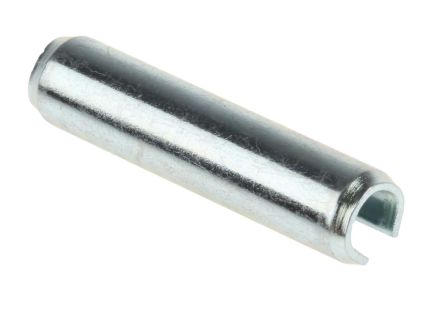
RS PRO 5 mm Diameter Galvanised Steel Spring Pin
RS Stock No. 037-4058
Brand RS Pro
- Brand: RS Pro
- Category: Spring Pins
- Super Section: Pins, Keys & Retaining Clips
€ 14.18
in stock now
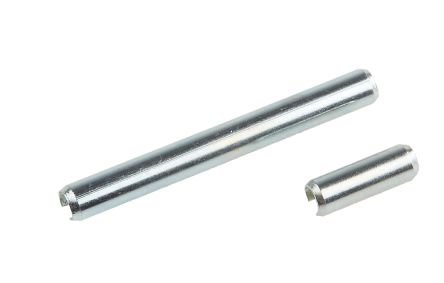
RS PRO 3 mm Diameter Galvanised Steel Spring Pin
RS Stock No. 037-4020
Brand RS Pro
- Brand: RS Pro
- Category: Spring Pins
- Section: Fasteners & Fixings
€ 16.82
in stock now
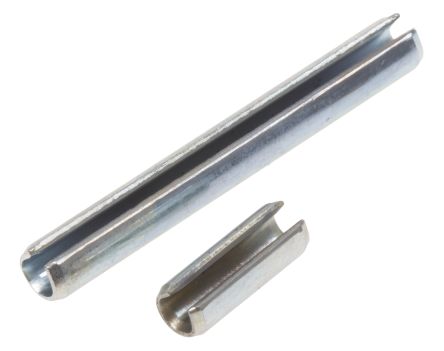
RS PRO 2.5 mm Diameter Galvanised Steel Spring Pin
RS Stock No. 037-4014
Brand RS Pro
- Brand: RS Pro
- Section: Fasteners & Fixings
- Super Section: Pins, Keys & Retaining Clips
€ 14.06
in stock now
RS PRO 2 mm Diameter Galvanised Steel Spring Pin
RS Stock No. 037-4008
Brand RS Pro
- Brand: RS Pro
- Section: Fasteners & Fixings
- Super Section: Pins, Keys & Retaining Clips
€ 13.93
in stock now
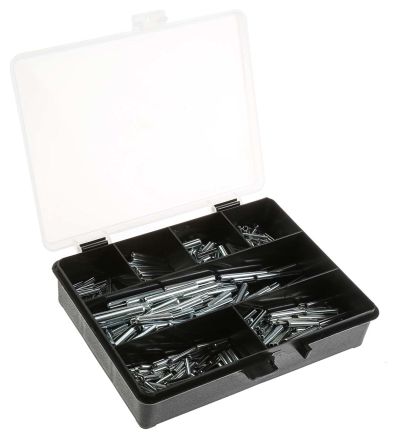
RS PRO 600 piece Galvanised Steel Spring Tension Pin Kit 5 mm 40 mm
RS Stock No. 037-4064
Brand RS Pro
- Brand: RS Pro
- Category: Pin, Key & Retaining Clip Kits
- Section: Fasteners & Fixings
€ 94.13
in stock now
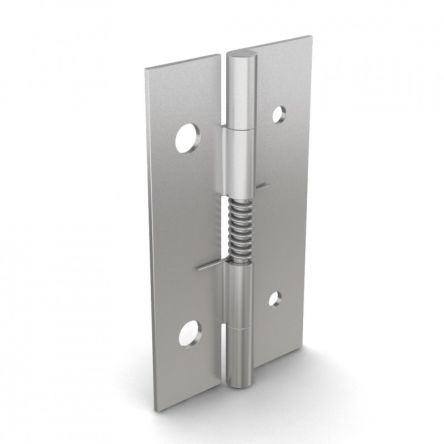
Pinet Raw Stainless Steel Spring with a Spring Loaded Pin, 60 mm x 35 mm x 1 mm
RS Stock No. 183-1638
Brand Pinet
- Brand: Pinet
- Section: Security & Ironmongery
- Super Section: Latches, Hinges & Handles
€ 67.77
17 in stock now
Pinet Raw Steel Spring with a Spring Loaded Pin, 12 mm x 4 mm x 1.5 mm
RS Stock No. 917-4425
Brand Pinet
- Brand: Pinet
- Section: Security & Ironmongery
- Super Section: Latches, Hinges & Handles
€ 22.84
20 in stock now
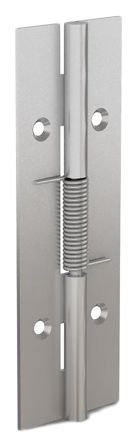
Pinet Raw 304 Stainless Steel Spring with a Spring Loaded Pin, 12 mm x 4 mm x 1.5 mm
RS Stock No. 917-4422
Brand Pinet
- Brand: Pinet
- Category: Hinges
- Section: Security & Ironmongery
€ 31.88
32 in stock now
Pinet Raw Steel Spring with a Spring Loaded Pin, 180 mm x 40 mm x 1.5 mm
RS Stock No. 917-4428
Brand Pinet
- Category: Hinges
- Section: Security & Ironmongery
- Super Section: Latches, Hinges & Handles
€ 51.58
1 in stock now
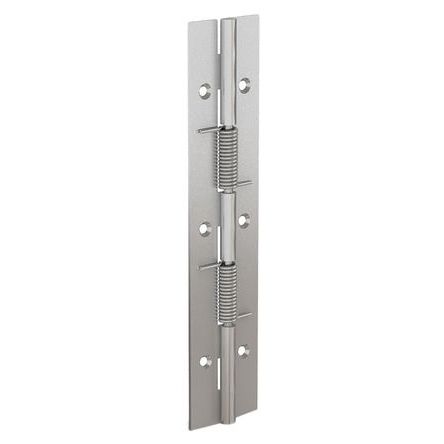
Pinet Raw 304 Stainless Steel Spring with a Spring Loaded Pin, 180 mm x 4 mm x 1.5 mm
RS Stock No. 917-4444
Brand Pinet
- Brand: Pinet
- Category: Hinges
- Super Section: Latches, Hinges & Handles
€ 44.68
20 in stock now
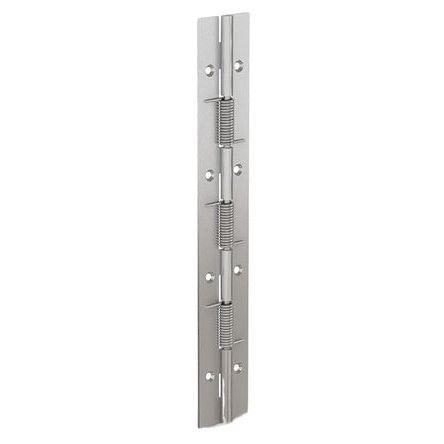
Pinet Raw Steel Spring with a Spring Loaded Pin, 240 mm x 40 mm x 1.5 mm
RS Stock No. 917-4453
Brand Pinet
- Category: Hinges
- Section: Security & Ironmongery
- Super Section: Latches, Hinges & Handles
€ 46.69
15 in stock now
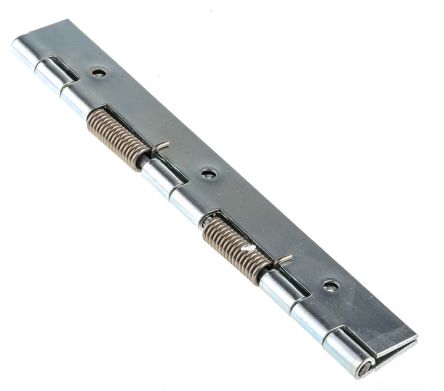
Pinet Zinc Plated Steel Spring with a Spring Loaded Pin, drilled Fixing, 180 mm x 4 mm x 1.5 mm
RS Stock No. 917-4440
Brand Pinet
- Category: Hinges
- Section: Security & Ironmongery
- Super Section: Latches, Hinges & Handles
€ 37.65
19 in stock now
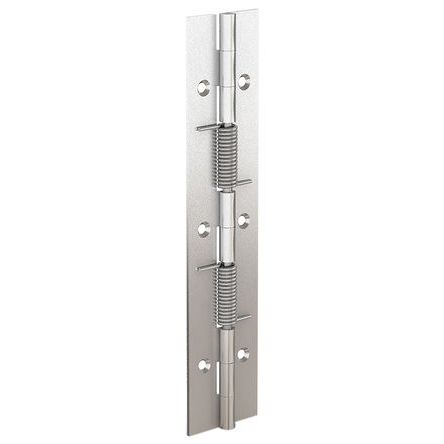
Pinet Raw 304 Stainless Steel Spring with a Spring Loaded Pin, drilled Fixing, 180 mm x 4 mm x 1.5 mm
RS Stock No. 917-4438
Brand Pinet
- Brand: Pinet
- Category: Hinges
- Section: Security & Ironmongery
€ 49.32
5 in stock now
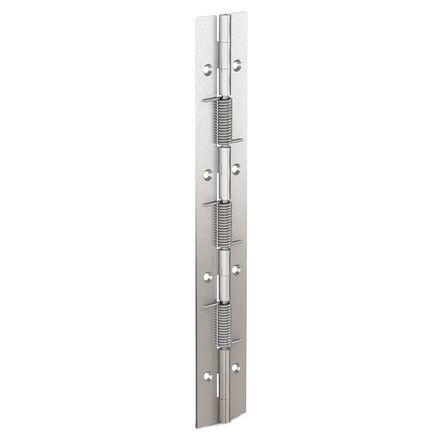
Pinet Zinc Plated Steel Spring with a Spring Loaded Pin, Screw Fixing, 240 mm x 40 mm x 1.5 mm
RS Stock No. 917-4456
Brand Pinet
- Brand: Pinet
- Category: Hinges
- Super Section: Latches, Hinges & Handles
€ 46.69
35 in stock now
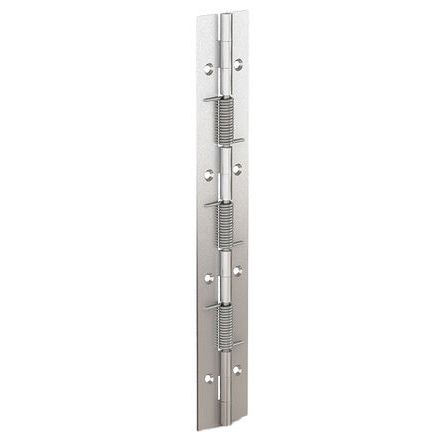
Pinet Raw Stainless Steel Spring with a Spring Loaded Pin, Screw Fixing, 240 mm x 40 mm x 1.5 mm
RS Stock No. 917-4478
Brand Pinet
- Brand: Pinet
- Category: Hinges
- Section: Security & Ironmongery
€ 104.17
2 in stock now
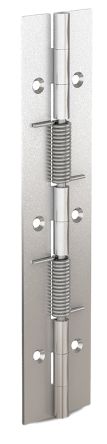
Pinet Raw Stainless Steel Spring with a Spring Loaded Pin, Screw Fixing, 180 mm x 40 mm x 1.5 mm
RS Stock No. 917-4412
Brand Pinet
- Brand: Pinet
- Section: Security & Ironmongery
- Super Section: Latches, Hinges & Handles
€ 53.84
9 in stock now
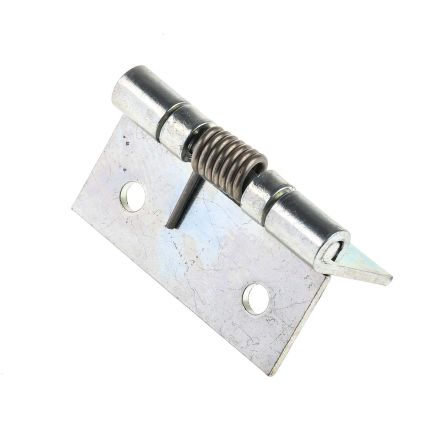
Pinet Zinc Plated Steel Spring with a Spring Loaded Pin, 50 mm x 50 mm x 2 mm
RS Stock No. 183-1637
Brand Pinet
- Category: Hinges
- Section: Security & Ironmongery
- Super Section: Latches, Hinges & Handles
€ 26.23
101 in stock now
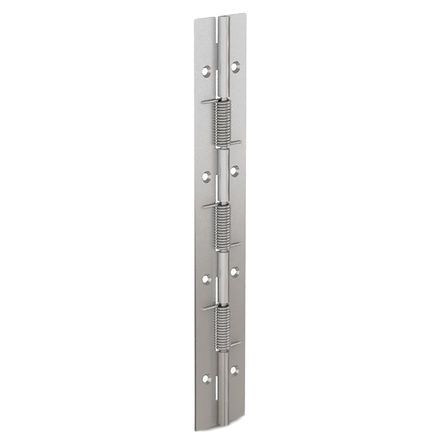
Pinet Raw 304 Stainless Steel Spring with a Spring Loaded Pin, 24 mm x 4 mm x 1.5 mm
RS Stock No. 917-4475
Brand Pinet
- Brand: Pinet
- Category: Hinges
- Section: Security & Ironmongery
€ 64.63
1 in stock now
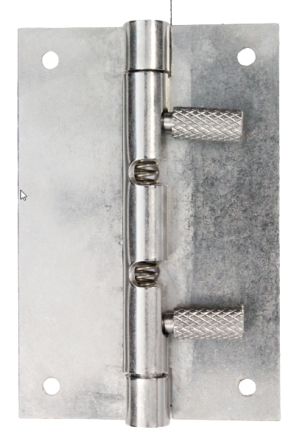
Steinbach & Vollman Stainless Steel Spring with a Barrel Pin, 76.2 mm x 50.8 mm x 8.75 mm
RS Stock No. 240-0533
Brand Steinbach & Vollman
- Brand: Steinbach & Vollman
- Section: Security & Ironmongery
- Super Section: Latches, Hinges & Handles
€ 35.52
15 in stock now
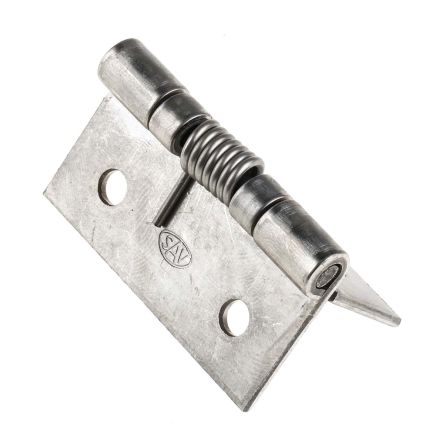
RS PRO Zinc Plated Stainless Steel Piano with a Spring Loaded Pin, 50 mm x 50 mm x 2 mm
RS Stock No. 726-4078
Brand RS Pro
- Brand: RS Pro
- Category: Hinges
- Section: Security & Ironmongery
€ 24.85
168 in stock now
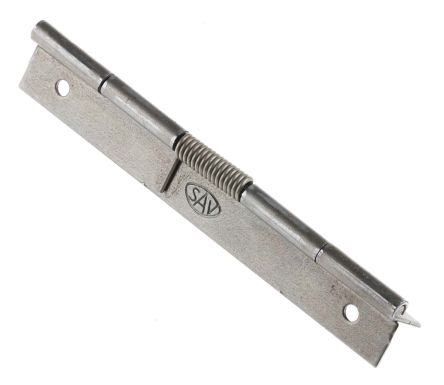
RS PRO Zinc Plated Steel Piano with a Spring Loaded Pin, 75 mm x 20 mm x 0.7 mm
RS Stock No. 726-4084
Brand RS Pro
- Brand: RS Pro
- Category: Hinges
- Super Section: Latches, Hinges & Handles
€ 15.81
30 in stock now
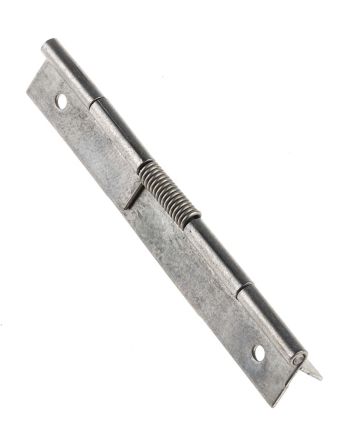
RS PRO Stainless Steel Piano with a Spring Loaded Pin, 75 mm x 20 mm x 0.7 mm
RS Stock No. 726-4093
Brand RS Pro
- Brand: RS Pro
- Category: Hinges
- Super Section: Latches, Hinges & Handles
€ 18.57
64 in stock now

What are steel spring pins and how do they work?
Steel spring pins combine simplicity with reliability. Their expandable design distributes load along the pin’s length and provides resistance to loosening under dynamic loads, making them a staple in mechanical assemblies, automotive components, industrial machinery, robotics, and hardware kits.
What are the common types of steel spring pins and when should I use each?
- Slotted roll pins: The standard type, cut with a longitudinal slot to allow compression. They are widely used for general-purpose securing across shafts and housings.
- Hollow roll pins (also called shaft pins): Similar to slotted pins but with a continuous hollow bore for lighter assemblies or where a wire insert is needed.
- Double-slit or multi-slit pins: Provides higher expansion in larger holes and can offer greater resistance to transverse shear in some designs.
- Metric and inch sizes: Available in both metric (mm) and imperial (inch) dimensions to suit regional standards and component specifications.
What materials and finishes are available for steel spring pins?
- Carbon steel: Common, cost-effective, suitable for general-purpose use with good strength.
- Stainless steel (e.g., AISI 304/316): Excellent corrosion resistance, ideal for damp, humid, or saline environments and outdoor applications.
- Alloy steel: Higher strength for demanding loads or high-service life applications.
- Zinc-plated or galvanized: Improved corrosion resistance for general environments.
- Aesthetics and additional protection for stainless or alloy pins.
- Enhanced wear resistance in some precision applications.
What sizes and tolerances are typical for steel spring pins?
- Imperial (inch): common diameters such as 1/16", 3/32", 1/8", 3/16", 1/4", up to 1/2" (with corresponding lengths to suit your bore depth).
- Metric (mm): typical diameters include 2 mm, 3 mm, 4 mm, 5 mm, 6 mm, 8 mm, 10 mm, 12 mm, etc., with lengths chosen to penetrate the assembly sufficiently without protruding excessively.
How do I install a steel spring pin correctly?
- Ensure hole diameter and depth match the pin size and that the hole is clean and free of debris.
- Align the pin with the hole and gently start by hand to ensure it seats squarely.
- Use an appropriate pin punch or installation tool to drive the pin in until it is flush or to the required depth. Do not hammer directly on the pin to avoid deformation.
- Check seating by attempting light axial movement. A properly seated roll pin should resist rotation and axial displacement while remaining removable when needed.
- Inspect the assembly for even expansion along the length of the hole. If the pin binds or seats unevenly, remove and recalculate the fit.
What are the best practices for removal and re-use of steel spring pins?
- Use a thin punch or pry tool to access one edge of the pin and gently drive it out in the reverse direction of installation.
- Inspect both the pin and the hole for wear, deformities, or scoring. Replace damaged pins and, if the hole shows signs of wear, consider resizing or re-boring as needed.
- Re-use of roll pins is possible in light-duty applications where the pin has not experienced deformation or excessive shear. In high-load or critical assemblies, replace with a new pin to ensure integrity.
What applications are steel spring pins ideal for?
- Automotive and motorcycle components (driveshaft couplings, gears, shafts)
- Industrial machinery and robotics (bearings, pulleys, gear trains)
- Electromechanical assemblies and control housings
- Aerospace and defense applications requiring vibration resistance with maintenance-friendly fasteners
- DIY and hardware kits for hobby projects, electronics enclosures, and furniture assemblies
What standards and specifications relate to steel spring pins?
- DIN standards for roll pins used in European manufacturing
- ISO considerations for pin geometry and material hardness
- ANSI/ASME guidelines for fasteners and vibration-resistant connections
- Manufacturer datasheets specifying material grade, coating, diameter, length, and recommended tolerances
How should I measure and specify steel spring pins for placing an order?
- Determine the hole diameter and the intended seating depth in the assembly.
- Choose the pin diameter that provides the appropriate interference fit (often slightly smaller than the hole to allow expansion).
- Select the pin length so it fully engages the hollow portion or extends as required by the design, without protruding excessively.
- Specify the material (carbon steel, stainless steel, alloy), finish (zinc, nickel, passivation), and any special coatings or heat treatment if needed.
Why choose RS Components for steel spring pins?
- Multiple sizes in both metric and imperial units
- Clear specifications for diameter, length, material grade, and finish
- Reliable supply and quick delivery for prototyping and production runs
- Technical support and application notes to assist with installation and maintenance