Tekninen Dokumentti
Tekniset tiedot
Merkki
ParkerProduct Type
Pneumatic Timer
Hazardous Area Certification
No
Series
PRT
Minimum Operating Pressure
3bar
Maximum Operating Pressure
8 bar
Minimum Operating Temperature
-15°C
Maximum Operating Temperature
60°C
Standards/Approvals
No
Alkuperämaa
France
Tuotetiedot
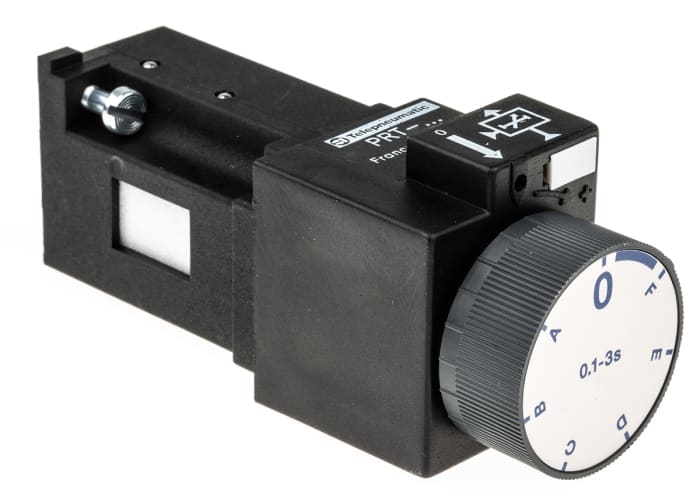
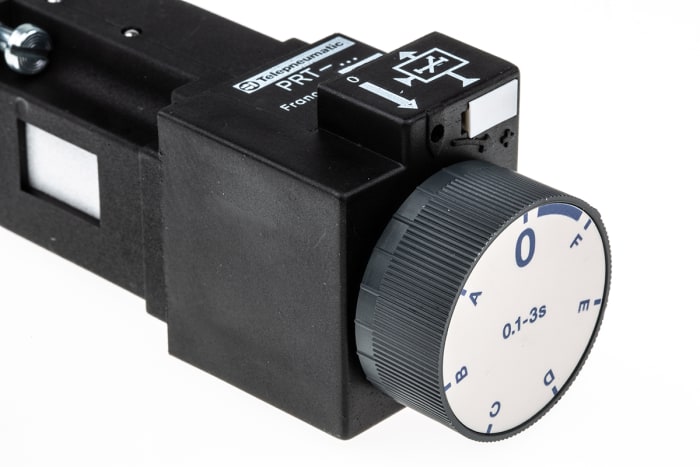
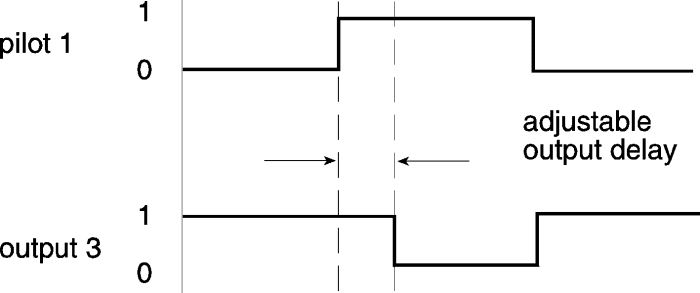
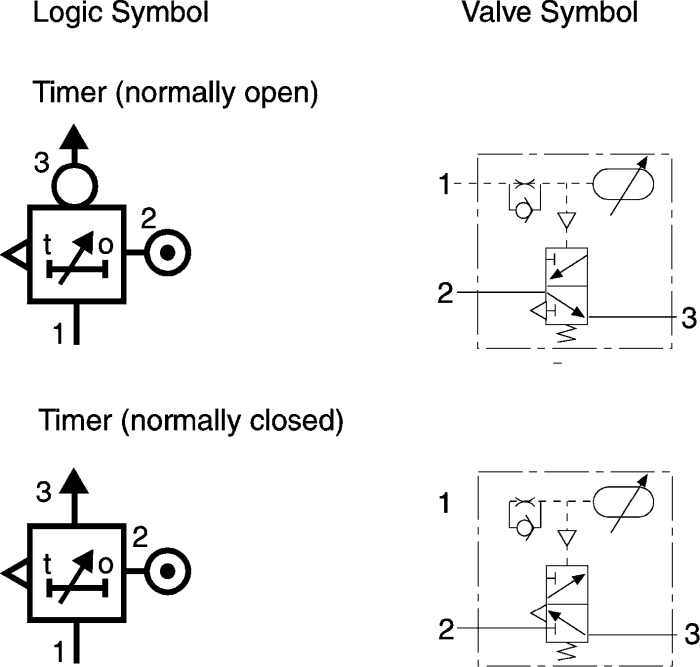
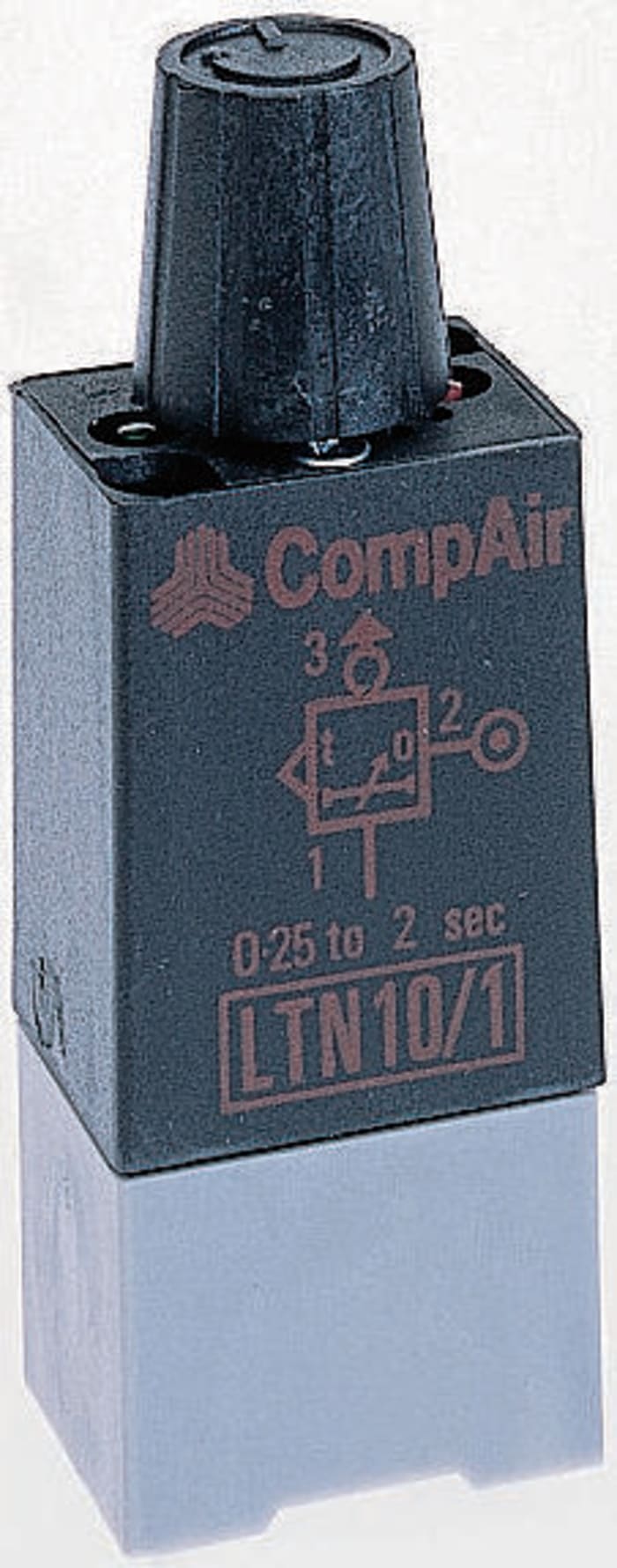
The Parker PRT series pneumatic time delay relay requires operating pressure ranging between 3bar and 8bar. This ON delay timer has a timing range from 0.1 seconds to 30 seconds. This timer has maintained input signal during an adjustable time after which a regenerated output appears. It is consists of a solenoid coil/core, operating spring, timing disk, filter and diaphragm. The core moves up into the coil when it has been energized and this leads to pressure on the diaphragm. The diaphragm moves into the top chamber which un-traps the air through the timing disk. By altering the needle valve you can adjust the amount of delay.
Note:
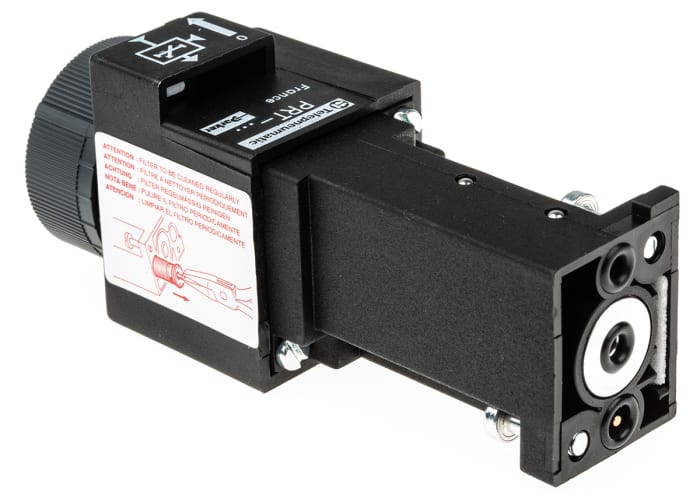
All the logic units require mounting on a separate 2 or 3 port base, available separately. Logic units have an input (green) and output (red) pressure indicator to show the state of the respective signal. Units are supplied with two captive screws for mounting on all types of base and sealing O-rings are in the bottom of each unit.
Varastotiedot eivät ole tilapäisesti saatavilla.
€ 300,00
€ 300,00 kpl (ilman ALV)
€ 376,50
€ 376,50 kpl (Sis ALV:n)
1
€ 300,00
€ 300,00 kpl (ilman ALV)
€ 376,50
€ 376,50 kpl (Sis ALV:n)
Varastotiedot eivät ole tilapäisesti saatavilla.
1
| Määrä | Yksikköhinta |
|---|---|
| 1 - 4 | € 300,00 |
| 5+ | € 288,00 |
Tekninen Dokumentti
Tekniset tiedot
Merkki
ParkerProduct Type
Pneumatic Timer
Hazardous Area Certification
No
Series
PRT
Minimum Operating Pressure
3bar
Maximum Operating Pressure
8 bar
Minimum Operating Temperature
-15°C
Maximum Operating Temperature
60°C
Standards/Approvals
No
Alkuperämaa
France
Tuotetiedot
The Parker PRT series pneumatic time delay relay requires operating pressure ranging between 3bar and 8bar. This ON delay timer has a timing range from 0.1 seconds to 30 seconds. This timer has maintained input signal during an adjustable time after which a regenerated output appears. It is consists of a solenoid coil/core, operating spring, timing disk, filter and diaphragm. The core moves up into the coil when it has been energized and this leads to pressure on the diaphragm. The diaphragm moves into the top chamber which un-traps the air through the timing disk. By altering the needle valve you can adjust the amount of delay.
Note:
All the logic units require mounting on a separate 2 or 3 port base, available separately. Logic units have an input (green) and output (red) pressure indicator to show the state of the respective signal. Units are supplied with two captive screws for mounting on all types of base and sealing O-rings are in the bottom of each unit.